
 News
News
Curium Partners with Oncidium Foundation to Support Access to Radioligand Therapy
11th May 2026
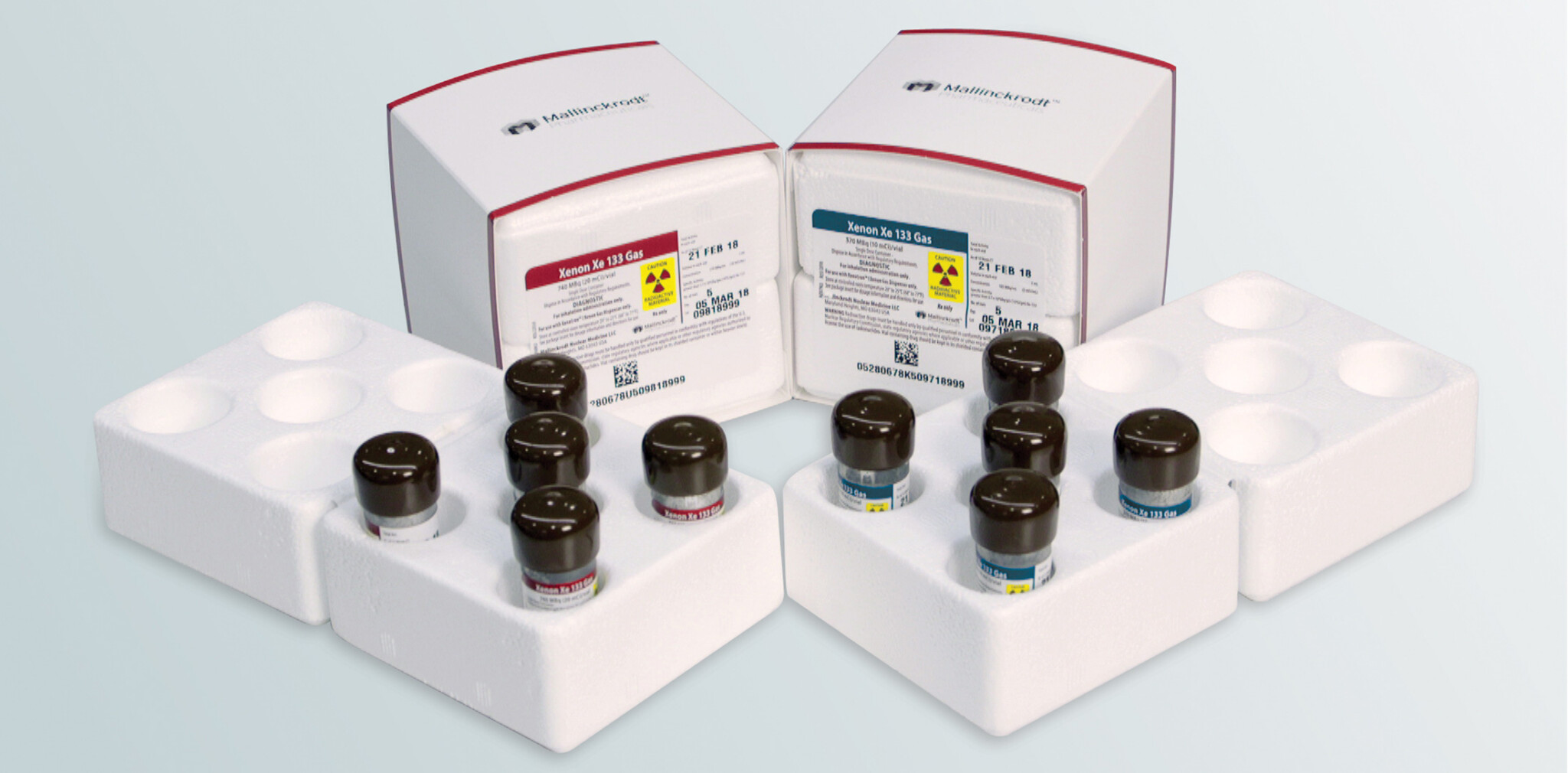
(St. Louis, MO – March 17, 2021) There are a variety of safeguards when using the Xenotron™ I Xenon (Xe 133) Gas Dispenser for use with Xenon Xe 133 Gas in Curium unit dose vials that help ensure patient safety. Use of the Xenotron I includes a stopcock and interconnector that is used during the administration process and is closed after administration of the Xenon Xe 133 Gas. This helps prevent any backward flow from the patient back into the device. Also, patient administration accessories (facemask, mouthpiece, nose clip, etc.) are typically single-use, disposable, and often have one-way valves to further reduce the risk of infectious transmissions.
Xenon Xe 133 Gas has been a reliable and valuable agent for diagnostic inhalation studies since 1982. Xenon gas aids in the evaluation of pulmonary function, for imaging the lungs, and may also be applied to assessment of cerebral blood flow. Since 2009, Curium’s Xenon Xe 133 Gas has been used in over 200,000 patients without any reported cases of infectious transmissions among the few adverse events overall. In addition, the FDA Adverse Event Reporting System (FAERS) Public Dashboard (which includes all reported Adverse Events) also shows no infectious transmissions. It is important to note that these statistics do not rule out the risk of infectious transmission, including risk of COVID-19 infection. It is also important to emphasize that nuclear medicine technologists and other medical professionals administer these studies utilizing common sense precautions and protocols to minimize risk. Most healthcare facilities have adopted strict policies governing appropriate personal protective equipment, airflow and ventilation requirements, room turnover times and local infection control specialists are often deployed to support and help evaluate facilities, equipment and staff PPE. Clinicians should always evaluate the risks and benefits of a Xe 133 study in light of all of these circumstances, including the patient’s diagnostic and clinical need for a Xe 133 study.
Per the Society of Nuclear Medicine and Molecular Imaging’s SNM Practice Guideline for Lung Scintigraphy 4.0: “An advantage of 133Xe ventilation is that single-breath, wash-in or equilibrium, and washout images can be obtained, thus providing a more complete characterization of ventilation and a more sensitive test for obstructive airway disease. Physiologic information about ventilation can best be obtained from 133Xe imaging.”
Curium agrees with these guidelines and looks forward to seeing a second revised and updated SNMMI COVID-19 and Ventilation/Perfusion (V/Q) Lung Studies statement that appropriately balances the clinical need for patients to have access to these procedures with the risk of infectious transmission.
Indication & Usage
Xenon Xe 133 Gas has been shown to be valuable for diagnostic inhalation studies for the evaluation of pulmonary function, for imaging the lungs and may also be applied to assessment of cerebral blood flow.
Important risk information
Warnings and precautions
Adverse reactions
Use in specific populations
Please see Full Prescribing Information.
News
11th May 2026
 News
News
17th March 2026
 News
News
17th November 2025